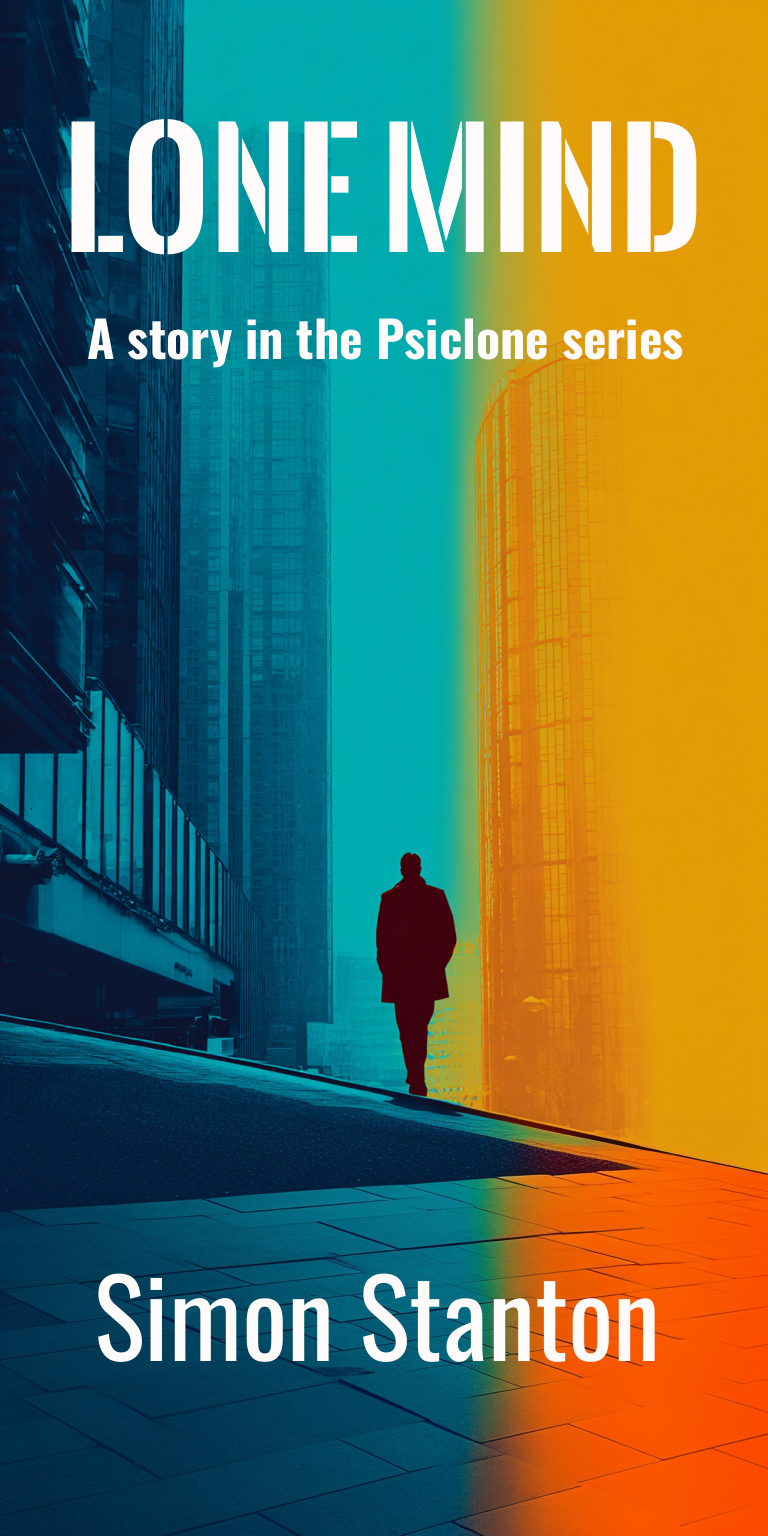
He Can Read Minds. It Still Might Not Be Enough.
A fast-paced thriller of espionage, psychic warfare, and a race against time in the streets of London.
When a telepathic MI5 agent uncovers a looming terrorist attack, every thought becomes a clue—and every step draws him deeper into danger. Outnumbered, exposed, and running out of time, Michael Sanders must use his unique ability to stop a coordinated strike before it devastates the city.
Click here to download it for free (no email, no sign-up)
I use a service called BookFunnel to help you download a copy of the eBook to your Kindle, tablet, phone, or other eReader of choice.
BookFunnel also offer support in downloading the eBook, should you need it.
Thrillers where insiders turn renegade, break the rules to survive, and risk everything to stop conspiracies that go further than anyone believes.
I write and tell stories. That’s the bare bones of it. This is my website (clearly).

Some authors write in a clearly-defined genre, a nice neat way of categorising every story they write. I don’t, which makes it a challenge to describe the kind of story I do write, but let’s have a go:
My novels follow people who find themselves drawn into events they only half understand—specialists, analysts, soldiers—individuals trained to maintain control, confronted with situations where control is no longer entirely possible. Some of these stories lean into the speculative: telepathic connections, emerging technologies, systems behaving beyond their design. Others stay closer to the surface, though not always as close as they first appear. Some wander into the fanciful.
Like the rooms in a haunted house, the pages you’ll find here offer some of the things you’d expect, maybe some things you want, and possibly surprises along the way.
Dive into The Psiclone Series for a telepathic twist on covert missions, or join Grace Palmer as she unravels conspiracies with grit, tech, and a touch of danger.
You like a good thriller. You enjoy the unexpected. You’re here, which means you don’t mind wandering off the beaten track and exploring somewhere a little different.